Brussels, 26 October 2026
From 19 to 22 October 2026, Rwandan Minister of Justice Emmanuel Ugirashebuja travelled to Geneva to defend his Government’s record before the United Nations Human Rights Committee, during its 146th session.
After 32 years of rule by a regime marked by extreme violence, particularly in the late 1990s, Rwanda continues to face serious human rights concerns: enforced disappearances, politically motivated killings, imprisonment of critical voices and transnational repression.
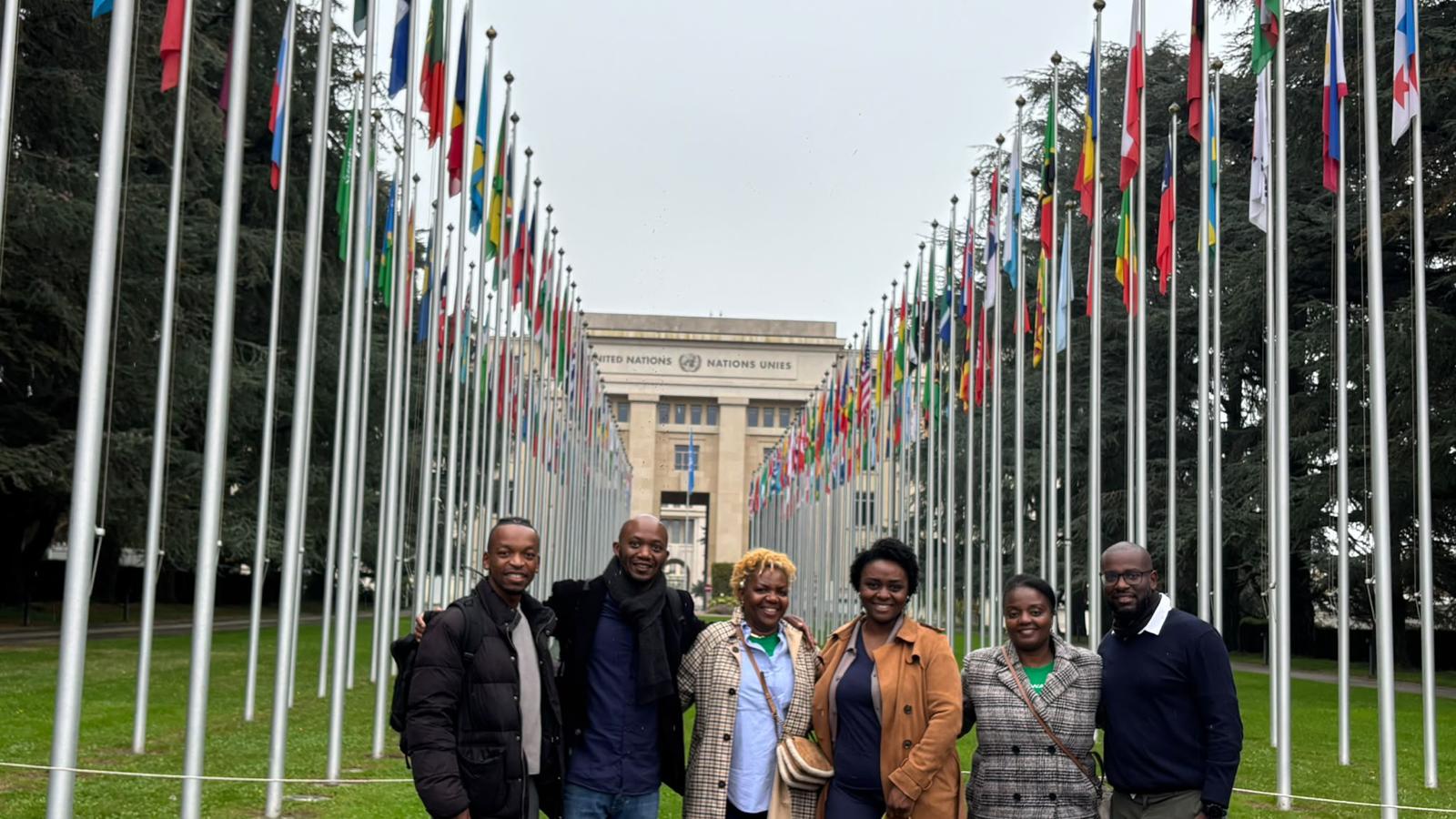
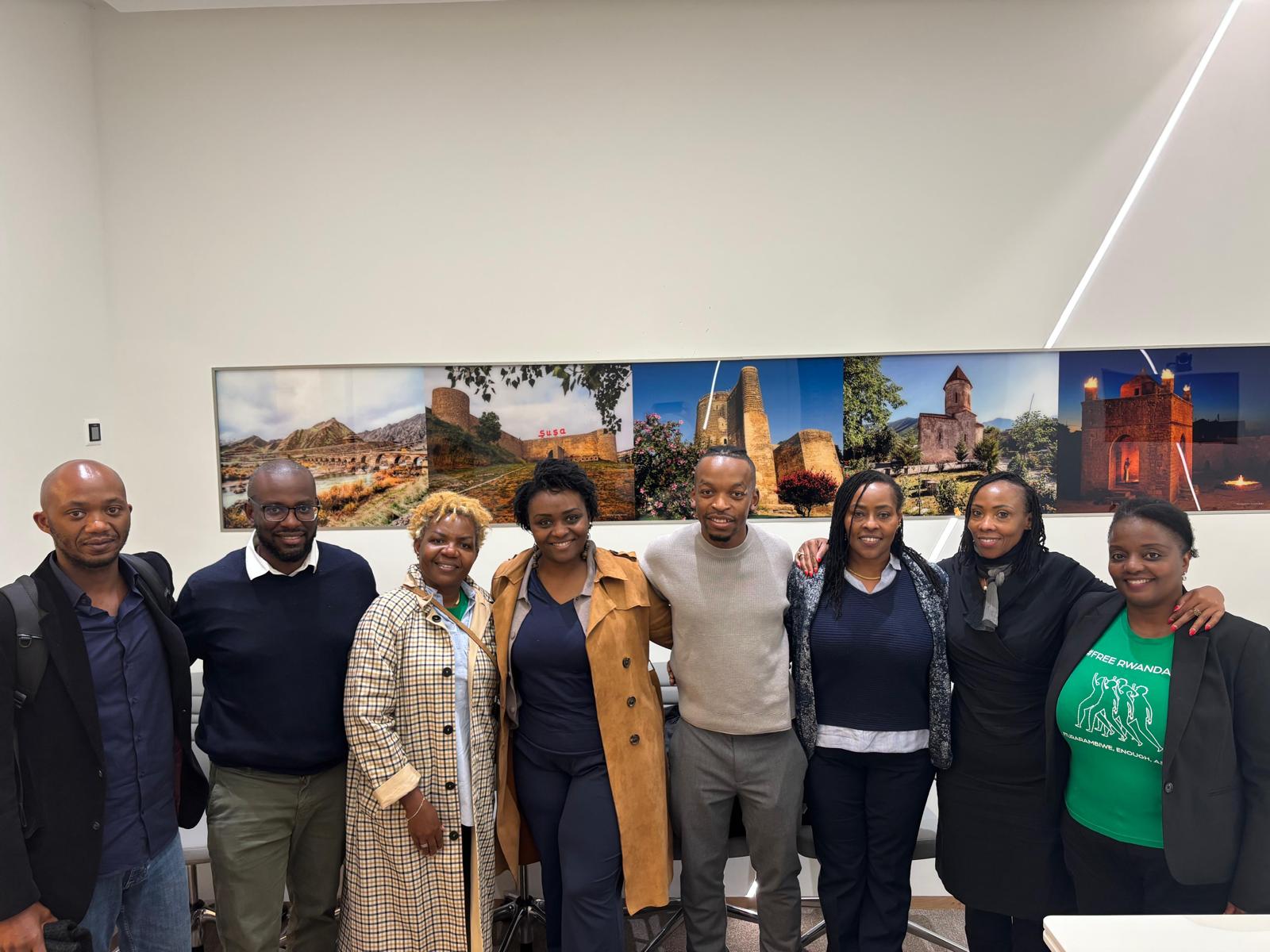
Jambo ASBL, which was present alongside other Rwandan civil society organisations, hoped that this review would provide an opportunity to finally hear the Rwandan authorities express a genuine willingness to turn the page on past and present violence, and to commit to respecting the fundamental rights guaranteed by the International Covenant on Civil and Political Rights.
These include the right to life, guaranteed by Article 6; the prohibition of torture and cruel, inhuman or degrading treatment, enshrined in Article 7; freedom of thought, conscience and religion, protected by Article 18; and freedom of opinion and expression, guaranteed by Article 19.
However, the Rwandan delegation’s responses have caused the gravest concern: they reveal a persistent denial of the realities being reported and a manifest lack of willingness to address them.
Mapping Report: A Persistent Refusal to Discuss It
This year’s review took place exactly thirty years after October 1996, when the Rwandan Patriotic Army (RPA), under the cover of the Alliance of Democratic Forces for the Liberation of Congo-Zaire (AFDL), launched its offensive in Zaire, now the Democratic Republic of the Congo. This offensive was accompanied by a campaign of pursuit and massacres of Hutu refugees, documented in particular in the Mapping Report of the Office of the United Nations High Commissioner for Human Rights.
Asked about the Mapping Report, the minister dismissed its contents, describing the report as “discredited in its methodology and allegations.”
Yet acknowledging these hundred of thousands of innocent victims remains essential to genuine national reconciliation among all Rwandans.
A Committee member nevertheless pressed to know whether Rwanda had conducted its own investigations into the episodes described. The minister confirmed that no such investigations had been carried out. This response shows that there is no willingness to establish the facts, let alone to deliver justice to the victims or take a step towards national reconciliation.
For thirty years, the Rwandan authorities have imposed silence about these crimes and other mass crimes attributed to the Rwandan Patriotic Front (RPF). This omertà violates the rights guaranteed by the Covenant: those who speak about these issues face exile, imprisonment, enforced disappearance or, in some cases, assassination.
Enforced Disappearances: “Ongoing Cases” for Years
On the issue of enforced disappearances, the delegation remained vague about the reasons why Rwanda still refuses to ratify the International Convention for the Protection of All Persons from Enforced Disappearance.
Asked about specific cases, including that of poet Innocent Bahati, missing since 7 February 2021, and Boniface Twagirimana, vice-president of FDU-Inkingi, missing since 8 October 2018 while he was in a prison cell, the minister brushed aside the questions, explaining that they were “ongoing cases.”
But how can this vague response be accepted when some of these cases have remained unresolved for five, eight, ten years or even longer? The minister presented no concrete efforts to demonstrate that the authorities are genuinely trying to establish what happened to the missing people, find them, provide answers to their families or prevent further cases.
Political Assassinations: A Deafening Silence
On the issue of political assassinations, the Rwandan delegation did not even consider it necessary to provide an answer, however purely diplomatic it might have been.
A Committee member nevertheless asked the Minister about some specific cases, including that of Syldio Dusabumuremyi, an opposition figure close to Victoire Ingabire, who was murdered on 23 September 2019 in particularly brutal circumstances. He was stabbed repeatedly in his shop in broad daylight.
To this day, no explanation has been provided to his family or to the Rwandan community. Even more tellingly, the Minister did not deign to answer the specific question put to him about this assassination.
This silence is not insignificant. It demonstrates a clear lack of willingness to confront these cases, establish responsibility and, above all, truly turn the page on the political violence that continues to claim so many victims in Rwanda.
Transnational Repression: Facts Played Down
The discussion of transnational repression took place in a particularly sombre atmosphere for the Rwandan community. Just days earlier, on 17 October 2026, the body of Sergeant Robert, a Rwandan opposition figure, had been found beheaded in Uganda. At the same time, Rwandan regime supporters, including journalists Ingabire Egide Bibio¹ and Robert Cyubahiro², had publicly celebrated his death.
In response to the allegations, the minister played them down. He suggested, in particular, that the victim was a sex offender and therefore did not deserve to be described as a dissident. He then referred to the thousands of homicides committed each year in Uganda, as though the number of crimes recorded in that country were enough to dismiss any question of possible Rwandan responsibility.
The few promises of cooperation with the investigation made by the minister remained very general. They cannot replace genuine, transparent and effective cooperation with the authorities responsible for establishing the facts.
“Suicides” in Detention: Responses That Evade the Issue
Asked about the case of lawyer Donat Mutunzi, the minister once again played down the issue of suspicious deaths in prison, explaining that suicides in detention occurred in Rwanda as they did elsewhere.
Such a response does not address the concerns raised by this scourge that is eating away at Rwanda. In May 2026, Aimable Karasira, a very popular university professor, died on the day he was due to be released. The Rwandan community was also still deeply affected by the death in detention of Kizito Mihigo, an icon of Rwandan reconciliation, whose death in his cell had been presented as a “suicide.”
It is not enough to state that suicides can occur in prisons in every country. When deaths occur in troubling circumstances, particularly involving critical voices, the authorities have a duty to conduct independent, credible and transparent investigations and to allow families to learn the truth.
The minister’s responses reflect a denial of this reality and an unwillingness to provide justice to the victims’ families, both for past events and to prevent further tragedies.
Lack of Freedom of Expression: A Selective Argument
On freedom of expression, particularly that of political opponents, the minister spoke at length about the judgment delivered by the African Court on Human and Peoples’ Rights in the case of opposition figure Victoire Ingabire Umuhoza, who has been imprisoned again since 19 June 2025.
The Minister launched into a lengthy explanation, selectively quoting certain paragraphs to give the impression that the Rwandan State had prevailed in this case against the leading figure of the Rwandan opposition, a mother of three.
Yet the Court found that Victoire Ingabire’s rights had been violated, including rights protected by the Covenant, such as freedom of expression under Article 19 of the International Covenant on Civil and Political Rights. It ordered compensation of approximately US$70,000. Nearly ten years later, according to information available to Jambo ASBL, no amount has been paid.
The delegation’s response demonstrates a worrying disregard for the international legal order and for Rwanda’s obligations, particularly those arising from the Covenant, including obligations whose breach has been established by an international court.
Illegal Detention and Torture: Facts Ignored
Regarding illegal detention and acts of torture in unofficial detention facilities or military camps, the minister went so far as to declare that he did not know of the detention site informally known as “kwa Gacinya.”
Yet reports by international organisations such as Human Rights Watch³ and numerous accounts from victims detained at this notorious site are available online in a single click. Several of these testimonies, in which victims recount the abuse they say they suffered there, have been viewed hundreds of thousands of times on YouTube. It is therefore difficult to believe that these allegations have never been brought to the attention of the Minister of Justice.
This includes the case of Aphrodis Matuje, who recounted his ordeal to journalist Agnès Uwimana Nkusi - now in exile - on 6 April 2022. Less than two months after this interview, on 26 May 2022, Aphrodis Matuje became a victim of enforced disappearance.
The same is true of Venant Abayisenga, who told journalist Théoneste Nsengimana - now in prison - on 30 January 2020 how he had been taken to “kwa Gacinya” and described the torture he had suffered there. Close to Victoire Ingabire, he has been missing since 6 June 2020.
The minister’s statements that he was unaware of these places are not only implausible, but also cynical and deeply troubling. They offer no sign that the Rwandan government intends to shed light on these allegations and respect the physical integrity of Rwandan citizens and the obligations incumbent upon it under the Covenant.
Freedom of Assembly: A Right No One Dares to Exercise
The delegation’s response on freedom of assembly likewise gave no indication of any willingness to reconsider the prior authorisation system. In practice, this system deprives the right to peaceful assembly, guaranteed by Article 21 of the International Covenant on Civil and Political Rights, of its substance.
The few spontaneous demonstrations that have taken place in recent years have been violently repressed. This was notably the case at the demonstration by Congolese refugees at Kiziba camp, during which police fired live ammunition at protesters, killing at least eleven refugees. This incident received widespread international coverage and condemnation. It is therefore particularly surprising to hear the minister claim never to have heard of a demonstration that was violently repressed.
Jambo ASBL Calls for Action, Not Mere Statements
In March 2017, at a press conference in Kigali, Diane Rwigara, a candidate prevented from standing in the presidential election, posed a question that is more relevant than ever: “How can solutions be found to problems that we are not allowed to discuss?”⁴
This question sums up the problem Rwanda continues to face, which emerged throughout the Minister’s evasive answers about the problems plaguing Rwandan society: human rights violations cannot be resolved if victims, their relatives, journalists and opponents cannot report them freely without fear of reprisals.
The minister’s denials on these fundamental issues reveal no genuine intention on the part of the Rwandan government to address the problems raised. The dialogue with the Human Rights Committee could, however, have been an opportunity to acknowledge the facts and make concrete commitments.
Jambo ASBL urgently calls on the Rwandan government:
- to end its policy of denial and shed light on past and current human rights violations;
- to respect the International Covenant on Civil and Political Rights, not only in laws and speeches, but also in practice;
- to ratify the International Convention for the Protection of All Persons from Enforced Disappearance, in order to send a clear signal to the Rwandan and international communities that the country is committed to ending these barbaric practices.
Jambo ASBL calls on members of the United Nations Human Rights Committee to use all their weight and diplomatic influence, individually and collectively, to press Rwanda to comply with its international obligations under the Covenant.
Jambo ASBL calls on Rwanda’s bilateral and international partners to make their aid and partnerships conditional on concrete and verifiable progress on human rights, and not to turn a blind eye to the violations reported.
Ruhumuza Mbonyumutwa
Secretary-General of Jambo ASBL
Press contact: info@jamboasbl.com
About Jambo ASBL
Jambo ASBL is a Belgian non-profit association founded in January 2008 by young people from the Great Lakes region. It promotes respect for human rights in the Great Lakes region in general, and in Rwanda in particular.
The association has independently or jointly with other partners initiated information and human rights advocacy projects, including the news website JamboNews⁵ and the #RwandanLivesMatter campaign⁶.
Notes and References
- Journalist at Rwandan public television. In a post published on X on 19 October 2026, she wrote: “I grew up hearing that no one could harm Rwanda and expect to live in peace afterwards. Have a good day, children of Gomains online: “When you choose to live like a dog, you die like a dog.” These words recall those spoken by General James Kabarebe, an adviser to Paul Kagame, after the assassination of Patrick Karegeya, another opposition figure, in South Africa on 1 January 2014.
- Human Rights Watch, “Rwanda: Torture, Ill-Treatment in Detention,” 15 October 2024: https://www.hrw.org/news/2024/10/15/rwanda-torture-ill-treatment-detention
- Diane Rwigara press conference of 14 March 2017: https://www.youtube.com/watch?v=jJS1WFhmsKE
- https://www.jambonews.net/
- https://www.rwandanlivesmatter.site/d and blessed children.”
- An influential journalist followed by nearly 150,000 people on X, he wrote in a tweet on 17 October 2026, which re